
San Diego County Arrest Log
The Sheriff's Department does not publish a full 72-hour, weekly, or permanent booking list for San Diego County. Who's In Jail covers current custody only. People leave the roster after release, so a copy of today's list cannot rebuild last week's arrests. A real multi-day search needs three layers instead.
The live roster answers one question: who is held right now. A Sheriff or municipal news release describes a selected incident. Open Data tracks aggregate activity without names. A formal report request reaches the underlying agency record. San Diego County has no tool that merges these into a single chronological arrest feed. Keep the layers separate. Use each for what it actually shows.
Read San Diego Arrest Sources
Start from the event. A county export does not exist. City or Sheriff sources identify selected incidents. The county roster tests current custody. The DA and courts track what happens to a case later. A durable report comes from the agency that made the arrest or documented it.
- Write down the person’s name, likely agency, place, and date range.
- Search Who’s In Jail for current county custody.
- Review the arresting agency’s official releases or press log for that period.
- Check Sheriff Open Data only for aggregate context.
- Use the DA or Superior Court search for later case identifiers.
- Request the arrest report or booking record from the originating agency.
For same-day checks, the San Diego County 24 Hour Arrests page walks through the quicker workflow. A multi-day San Diego County search demands more patience. News releases, court filings, and records requests all move on different schedules. Build in time for each layer.
San Diego Arrest Record Fields
No unified San Diego County entry exists. So log every field next to its source. A dispatch location is only approximate, not an arrest site. A booking time is not an arrest time.
| Source field | Correct reading |
|---|---|
| Booking number | Identifier for a county intake event. |
| Arrest agency | Agency listed in the custody record. |
| Date and time booked | County intake time, which may follow arrest and transport. |
| Facility and housing | Current operational placement, subject to change. |
| Charge class or code | An charge as recorded, not a conviction. |
| Release or bail status | A custody field that may be recalculated. |
| News publication date | The date an agency described a selected event, not necessarily event time. |
| Court case and filing date | A later judicial index event, not the full disposition. |
The SDPD News Center demonstrates the selective nature of agency releases.
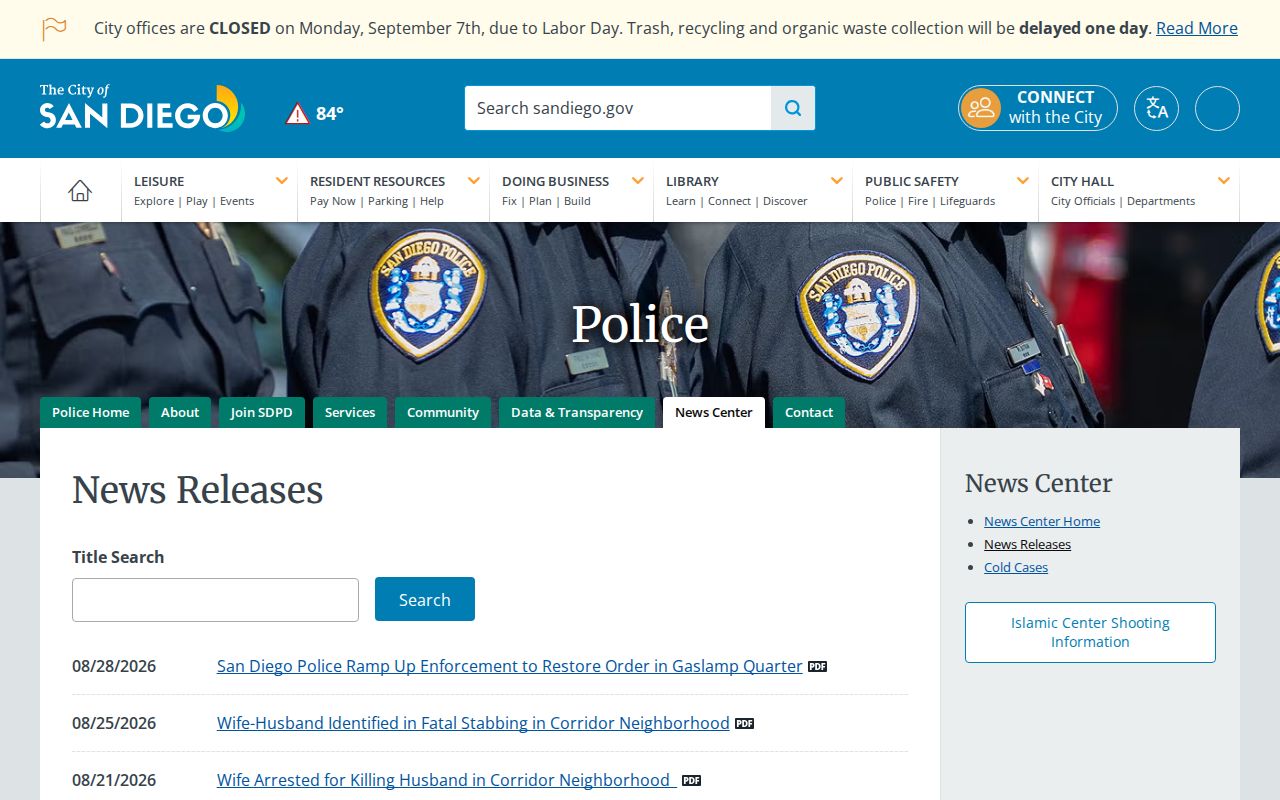
Treat a dated news release as one sourced event. It never proves other arrests did not happen. Agencies publish selectively across San Diego County. Silence is not an empty blotter.
Weekend San Diego Arrest Checks
Weekends and holidays widen the gap between events and public documents. The roster updates as county intake proceeds. But news releases stay selective, and a records office may not process a request until business hours return. Court and DA entries follow their own filing cycles. A Monday search is not a complete weekend arrest total.
Start with the live roster for current custody. Then check the relevant agency's dated releases. SDPD Dispatch Online and Sheriff Calls for Service can offer operational leads. Neither proves a booking occurred. Chula Vista's interactive Press Log and Oceanside's press-release archive are city sources too, not county booking lists.
San Diego Arrest Archives
Once someone leaves the active roster, request the specific report. The record did not vanish. The Sheriff's Records & ID Division sits at 9621 Ridgehaven Court, San Diego, CA 92123. The phone number is 858-974-2110. Its report page routes requests through the Public Records Center. It also accepts them at a station or substation. A service form works too. Most crime, arrest, and accident reports are described as retained for ten years. Certain serious or unresolved categories may be kept longer.
The ordinary report-copy fee is $20, with a 3-to-10-business-day goal. Access limits and redactions depend on law and requester status. A useful request names the person and agency. It lists the date range and report or booking number. It names the exact document sought. Who's In Jail does not display a routine booking photo. A photo request may be denied. Other parts of the record can still be released.
San Diego Arrest Counts Differ
Sheriff Open Data and monthly activity reports show trends by area and period. They never identify each booked person. The Sheriff notes some activity tables exclude detention facilities. They also leave out court services and areas served by other agencies. So an arrest count cannot be relabeled as a county-jail booking count.
Use counts to gauge broad agency workload across San Diego County. The official Open Data page stays clearly aggregate. It cannot fill a missing name-level log. It will not fix spelling or show a case outcome. City police activity and county detention intake measure different operations.
San Diego News Blotter Limits
Sheriff and city news releases highlight selected arrests, critical incidents, investigations, and public-safety notices. Local outlets like Times of San Diego, NBC 7 San Diego, KPBS, and East County Magazine add reporting on chosen cases. These are secondary sources. They are not official or complete San Diego County arrest logs. Publication choices, corrections, and update times all vary.
Third-party booking sites are weaker still. A Mugshots.com San Diego County section exists. Recently Booked's California index showed no San Diego listings, and Busted Newspaper showed no California section at all. Such pages can go stale, omit context, or keep an entry long after official custody changes. Start with government sources. Use news only as a lead. The KPBS News page is one example of local journalism that may report selected justice events.
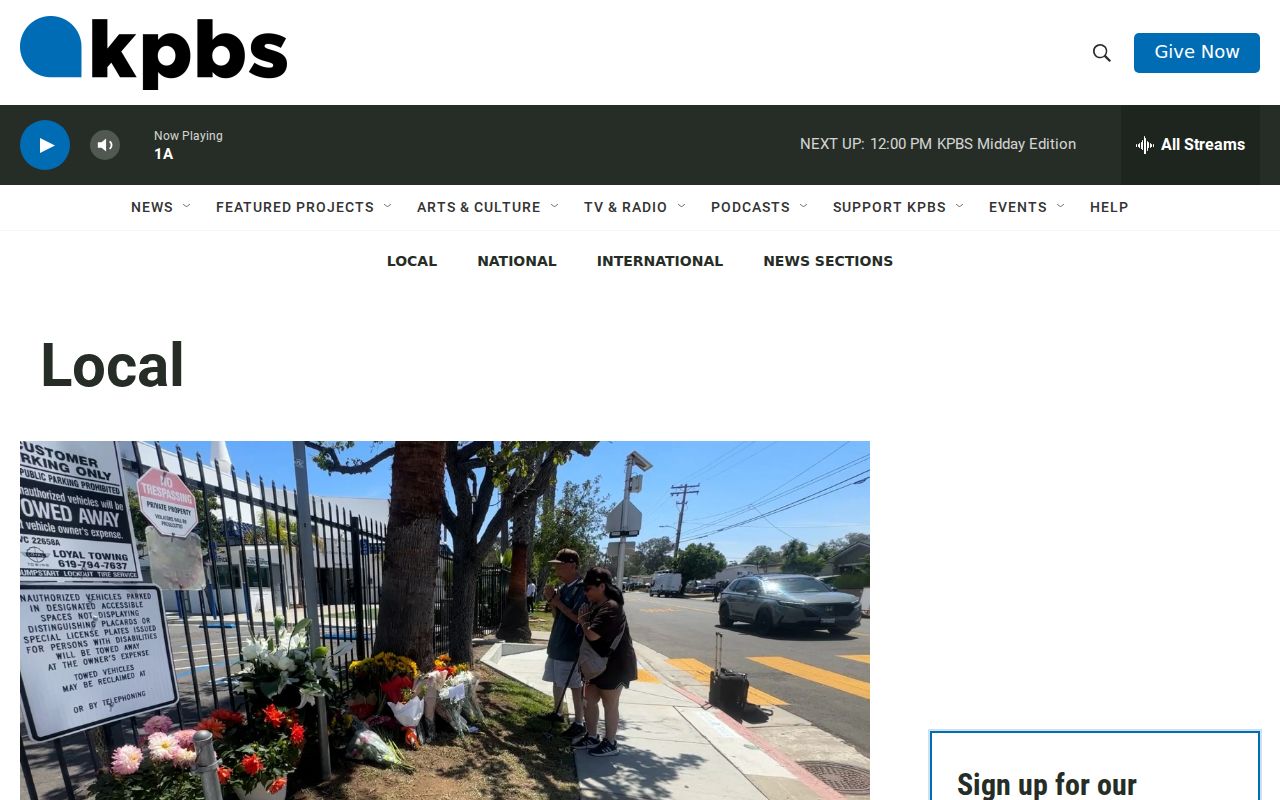
Every San Diego news report should carry a clear date. Check it against the agency record. The court file works as well. Dates keep arrest timelines straight.
San Diego Arrest Timeline
A San Diego arrest is only the first stamp on a timeline. Booking comes next. The Sheriff handles that step separately. The District Attorney then decides whether to file charges or drop the matter. The office can also adjust the counts. Then the Superior Court takes over, logging hearings until a final outcome lands. Each stage leaves its own record with its own agency. Lumping them into a single "arrest record" invites mistakes.
Know the gaps, too. The DA case search leaves out juvenile matters and unfiled cases. Some closed files stay hidden too. Certain San Diego and Poway misdemeanors are excluded as well. The court's own index has limits as well. Entries can linger even after a dismissal. The index never spells out the full set of charges or the final disposition. For the authoritative paper, you may need to pull copies at the courthouse. The Superior Court online-search information spells out where the index stops.
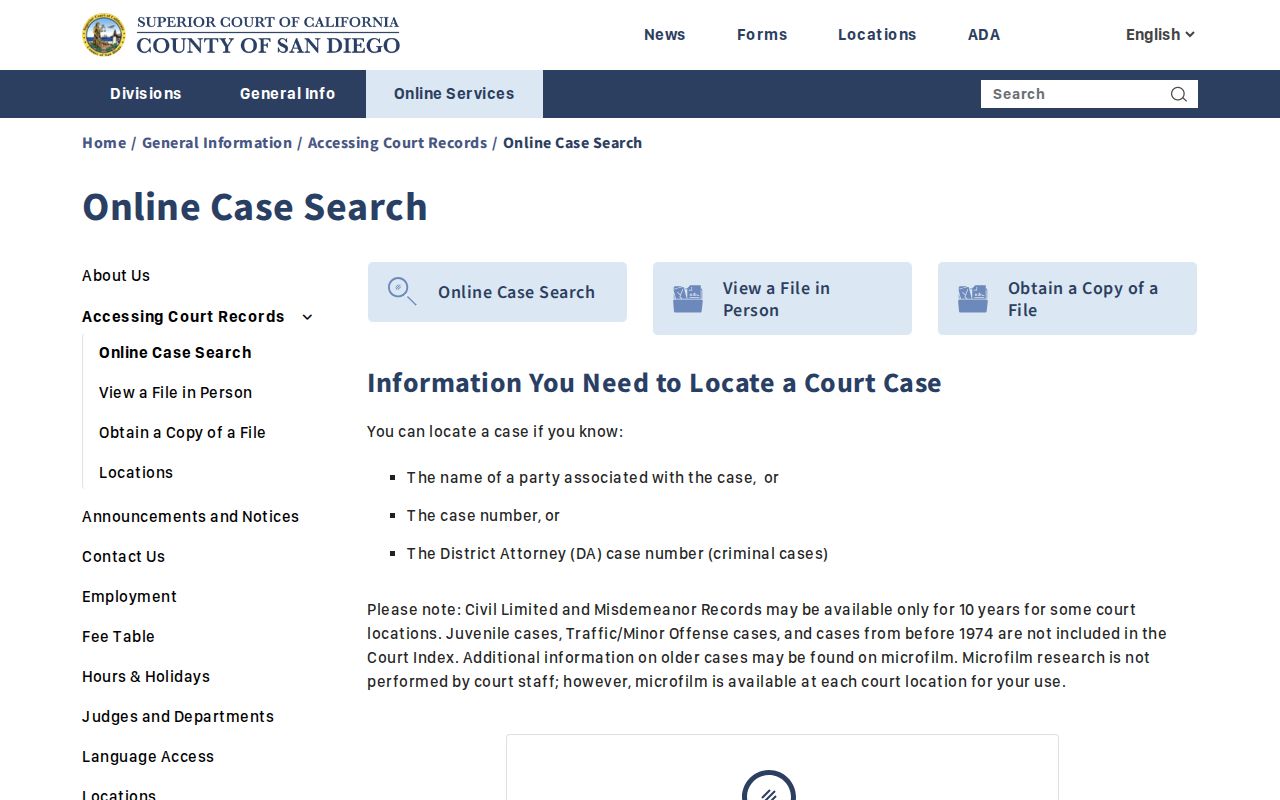
The court decides the outcome. Use its records-access process. Ask the clerk for the case file. The file shows how each San Diego arrest case ends.