
San Diego County VINELink Coverage
San Diego County runs its own VINE deployment. The Sheriff ties it to people found in Who's In Jail. VINE stands for Victim Information and Notification Everyday. It supports a custody-status check plus registration for certain release or transfer events. The statewide entry point is VINELink California. The Sheriff's own instructions walk through the county path.
The service is free, but it only reports what connected agencies send. County jail data and state-prison transfers can show up when those systems feed VINE. A federal Bureau of Prisons record needs a separate federal locator. Immigration custody does too. A city arrest that never reached county booking may simply be absent.
Start at the California VINELink screen when you prefer the statewide interface.
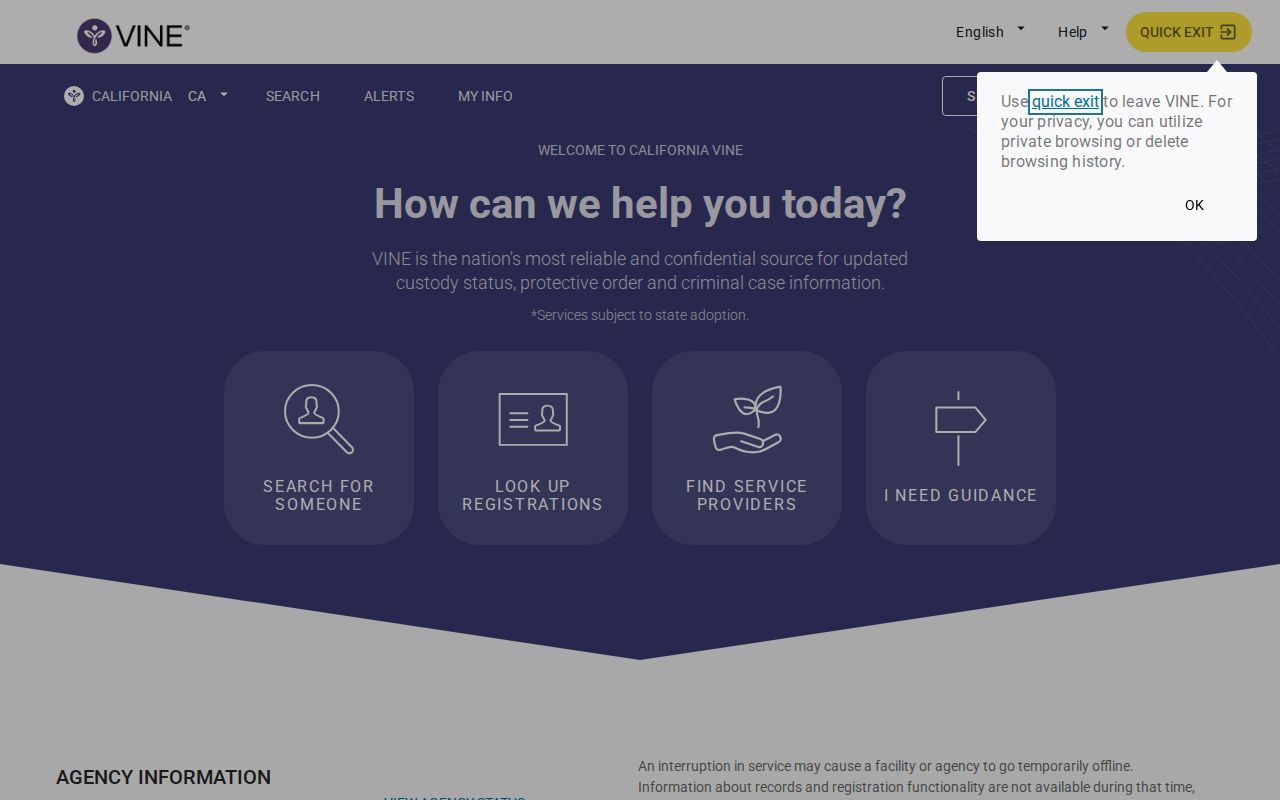
Pick California first. Then choose the right participating agency. Enter only the minimum data the match requires. Nothing more is needed.
Check a San Diego Arrest
Start with the Sheriff roster. It is the most local route. It links the right county record to the notification system. That step matters when a similar name appears elsewhere in California. Enter no more personal data than the official search asks for.
- Open the Sheriff’s Who’s In Jail name search.
- Enter the last and first name and complete the verification code.
- Compare available details before selecting a record.
- Open the person’s custody detail.
- Find the status-notification link about halfway down the record.
- Allow the new VINE window to open and confirm the selected record.
A direct VINELink route also allows a California name search or a lookup by booking or custody identifier, depending on the live interface. Multiple matches demand care. Compare agency, facility, and any identity details before choosing. The San Diego County recent arrests hub explains the official roster and where its record boundaries sit.
San Diego VINELink Result Fields
The live display can change, and records vary in detail. Treat VINELink as a status and notification tool. The Sheriff roster stays the official local custody source. Court systems document whatever happens later in a case.
| Result element | How to use it |
|---|---|
| Name | Confirm the selected person while accounting for similar names. |
| Booking or custody identifier | Distinguish the custody event when the interface supplies an ID. |
| Custody status | A participating agency’s current reported state, subject to update lag. |
| Facility or agency | The reporting custody location or authority, which may change after transfer. |
| Notification control | The route to register contact details for available events. |
| Release event | A reported release or scheduled release when supported by the record. |
| Transfer event | A move to another county or state prison when covered. |
VINELink does not explain every charge. It does not replace a court record. A person can also move from one participating system into another. Note the date and source of any status you see. Treat nothing as permanent.
Register San Diego Custody Alerts
Registration starts only after the correct custody record is chosen. The Sheriff says to enter a phone number and/or email address. Then follow the prompts. Accurate contact details are essential. One typo and the alert never arrives. The screen may offer phone, email, PIN, or voice options. Follow whatever labels appear during registration.
- Select status notifications from the Sheriff detail record.
- Verify that the VINE window shows the intended person and agency.
- Choose an available delivery method.
- Enter the phone number or email address accurately.
- Create or enter a PIN if the voice-registration path asks for one.
- Complete confirmation and retain the registration details securely.
Never expose a PIN, phone number, or email in a shared screenshot. A registration is tied to one record and one contact route. If the person later enters another system, check again. Then register anew. The general VINELink site shows the broader state-selection interface.
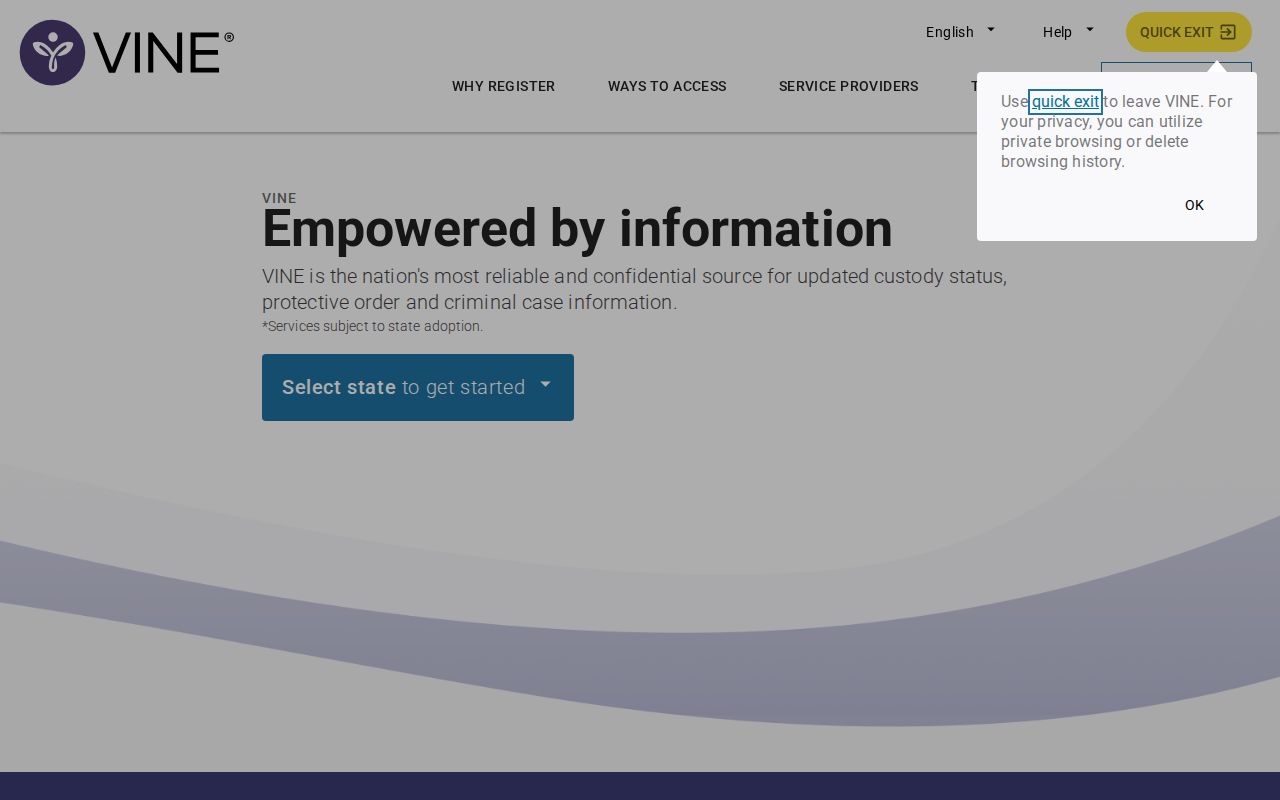
Use that site to reach the participating state service. From there, return to the local Sheriff source. County custody verification belongs there. That is the dependable chain.
Verify San Diego VINELink Alerts
VINE is not an emergency service, and it cannot guarantee anyone's safety. Alerts can lag behind real events or fail on bad contact data. They may also reflect only what a participating system supplies. For immediate danger, call 911. For a time-sensitive custody question, verify through Who's In Jail. The county custody-information line is 619-409-5000.
A fresh arrest may not appear right away. The Sheriff says pre-booking can take up to four hours, and transport adds its own delay between arrest time and booking time. The San Diego County 24 Hour Arrests page covers that same-day gap and the roster fallback.
Roster-Linked San Diego VINE
San Diego's distinctive feature is the direct handoff from Who's In Jail. The Sheriff tells users to locate the person and open the detail record. Then choose status notifications about halfway down the page. That beats starting with a broad national search and guessing among the results. It also clarifies something important. VINE follows one selected custody record. It does not publish a county arrest feed.
The Sheriff lists 1-877-411-5588 as the local VINE number. A City of San Diego Family Justice Center resource page lists a general support number too. For a county record, though, the Sheriff's local number should lead. Interface options can change. Listen to the current prompts and confirm the correct person is selected.
San Diego Custody Systems Differ
San Diego County keeps its custody records in separate buckets. Who's In Jail covers current custody only. It shows just the people held by the Sheriff right now. State prison time falls to the California Department of Corrections and Rehabilitation. Federal inmates belong to the Bureau of Prisons locator. ICE runs its own detainee locator for immigration custody. VINELink will not merge all of these into one master file.
Movement complicates things further. A person released in San Diego drops off the live roster. Yet the booking record can still be requested. A transfer hands the person to a new agency entirely. So always match each answer to its own source. And note the day you searched it. For statewide VINE background, the California State Sheriffs' Association is the place to start.
Statewide tools help. They don't cover everything, though. San Diego runs its own custody systems. The sheriff's live roster and local custody line stay primary.
San Diego Arrest Status Context
VINE reports custody events, not court outcomes. A booking charge can shrink, change, or get dismissed. It may never be filed at all. The District Attorney case search and Superior Court records sit later in the timeline. Even a court index may not close the matter. So treat each alert as one piece of a larger picture.
Register for a real reason. For example, learn that a known person was released or moved. A missed alert proves nothing about conduct. If records disagree, ask the holding facility first. The agency that made the arrest controls the immediate custody question.
Keep a private note of your registration date, delivery method, chosen agency, and booking number. That record helps when an alert runs late or a transfer changes the listed jail. Never store sensitive contact details in a public spot. If alerts stop, go back to the official roster and confirm which agency holds the person. Re-register only through the official VINE path.
The Sheriff's roster tells you what its current record shows. VINE tells you whether a participating event triggered an alert. Neither gives a permanent history of San Diego County arrests.